On eating the stuff of legend by Tony Cassar Darien
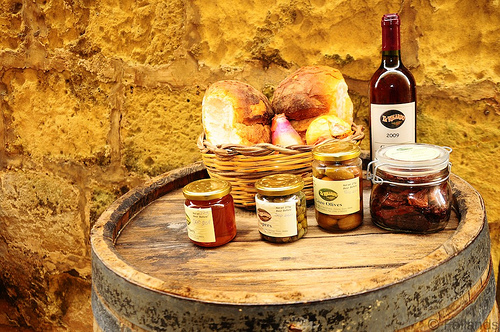
 I would not say that there very many people currently eyeing real estate in Malta, or who are in the process of relocating to Malta, who bother about the island’s gastronomic history and contemporary culinary delights and I dont think that the reputable real estate agent in Malta that you may be using would think of telling you much about it. Not saying that he or she couldn’t be your perfect conceirge. The Maltese cuisine is a part of the culture you may be considering considering to relocate to so we felt this article may be of interest.
Although the Maltese islands are littered with eateries specialising in continental and international cuisine, from regions as far flung as India, China and the Far East, the native kitchen, according to various gourmets serves the stuff of legend.
The Maltese art of cooking has certainly withstood the test of time. The prehistoric settlers lived off plants although they also ate game which they hunted with handmade implements. Over the centuries however, the early Maltese learned how to practise plant cultivation and animal husbandry.
Both the Phoenicians and the Romans specialised in perfecting the olive oil industry. The local villages sporting names like Zejtun (land of oil manufacture) and Zebbug (literally a grove of olive trees), together with the remains of a massive olive pressing factory discovered in Burmarrad, explain how the industry flourished until it reached a level where it became the envy of the Mediterranean region.
Under Arab rule the Maltese farmer continued to learn and experience other agriculturally linked innovations. With the int roduction of Is-Sienja (a water-wheel lined with buckets which lifted the water from under the ground) the agriculture industry of the Maltese islands continued to flourish.
However it was with the advent of the Order of St John in 1530, (later known as the Knights of Malta) that gastronomic delights peaked, as the art of cooking by the local cooks employed with the Order turned their labours into a world renowned cuisine.
During the period of the Knights, often referred to as the Golden Age of the Maltese Islands, every delicacy available in the sixteenth century was exported and served during the daily illustrious banquets, which became the order of the day for these noble princes of the church. Besides importing ice from Etna in Sicily for their ice-cream, the knights hunted wild rabbit, poultry and various other game. Not only was hunting an extremely popular sport; it also became necessary because the Knights and their guests were great meat consumers.
While both the French and English sojourns on the Maltese Islands left their culinary imprint, their influence on the eating habits of the Maltese people differed for obvious reasons. Moreover the British Armed Forces, as part of the British Empire’s security plans for the Mediterranean, posted thousands of army, naval and air force officers who were eventually accompanied by their families. And as had happened in the past many Maltese were employed as housekeepers and cooks having to provide roast meat meals, puddings, custard and sponge cakes which made up the diet of their new employers.
The advent of the Second World War when Malta was likened to ‘a lone unsinkable aircraft carrier’ (as deftly put by the then British Prime Minister Winston Churchill) there loomed a food crises. For the first time in its existence the Maltese had to make do with ‘new’ food that was previously unheard of, such as cheddar, corned beef and butter. The war-time rationing of food was also an unsavoury first time experience for the locals. On achieving the islands’ independence in 1964 the Maltese farmer was free to experiment and promote the native produce. Products like capers, potatoes and onions were soon fetching the highest prices on the European markets.
Successive governments invested in the modernisation of agricultural knowhow while a thriving tourist industry provided yet more openings for the Maltese youth who wanted to carve their careers in the catering industries.
The islands’ successful venture in the tourist industry resulted in the majority of incoming tourists demanding more of the local traditional fare. A by-product of this request could perhaps be gauged by the surprising number of cookery books locally published during the past twenty years, detailing the intricacies of the local cuisine along with the historical notes.
Although the Maltese buyer is spoiled by the sheer array of international agricultural and other edible brands, housed on the shelves of the various international supermarkets which abound on the island, it is obvious that the Maltese unilaterally give their first preference for the home-grown product. The local orange, lemon, fig, plum, strawberry, lettuce, cauliflower, tomato and all the other agricultural produce boast of a unique taste which is secondary to none.
The same may be said for the unique Maltese bread, crusty on the outside yet meltingly soft on the inside. Or the fried-in-garlic finger-licking rabbit rated by some as Malta’s national dish. Bragoli or green peppers, the first consist of tasty slices of beef stuffed with herbs and other delicaces; while the vegeterians may prefer a vegetable, like green pepper in lieu of the meat. The myriad permutations of goat’s cheeses which come in soft, hard, fresh and aged forms are also difficult to beat when it comes to pleasing the palate.
During the past decade local wines processed from the various home-grown grapes have challenged for the top honours in international competitions. In 1880, Simonds of Reading, the British brewery, established a beer importing business in Malta which has since been taken over by a local family and named Farsons (for Farrugia and Sons). Ale and lager are now brewed on one site with other brands that also include stout, lacto and the delightful Blue Label. Most of these brands have won coveted awards in international competitions. Farsons also bottle Kinnie, a bitter-sweet non alcoholic drink which for the past thirty odd years have been successfully marketed internationally.
The Maltese fishing industry is also kept very busy throughout the year and Malta’s and the blue fish tuna is considered to be something of a marine delicacy and constitutes one of the island’s main exports to Japan. The lampuka is another indigenous fish very much sought after by tourists and locals.
The local caterers have been recently showing a growing interest in the rediscovery of traditional Maltese food. The Ministry of Tourism has been encouraging the idea by organising food and wine festivals. Moreover the local councils seem to also have latched onto the idea and scarcely a weekend passes without some town or village organising a showcase of its own particular products. Thus we find Il-Festa tal-Frawli (the strawberry fair); il-Festa tat-Tonn (Tuna Feast), il-Festa tal-Hobz u Imbid (Feast of bread and wine) etc.
When in the past couple of decades, prestigious bodies like the WHO, (World Health Organisation), singled out the Mediterranean cuisine; for its nutritive and sustainable benefits, there must have been many of the older Maltese cooks, who would knowingly whisper to their younger friends, in the kitchen, and say: ‘I told you so’
Wtitten by Tony cassar Darien