Gudja is known first and foremost for its peaceful, suburban charm, and nightlife reflects that. The village keeps things low-key after dark, with a small number of local bars offering a relaxed spot for an evening drink among neighbours rather than a proper night out. For those seeking a livelier atmosphere, Paceville and St Julian’s, Malta’s main nightlife hub, are a short drive away, along with the bars of Valletta’s Strait Street for something calmer. Gudja itself remains quietly tucked away, making it a natural choice for those who want village peace close to home, with the busier options never far away when the mood strikes.
Gudja
History
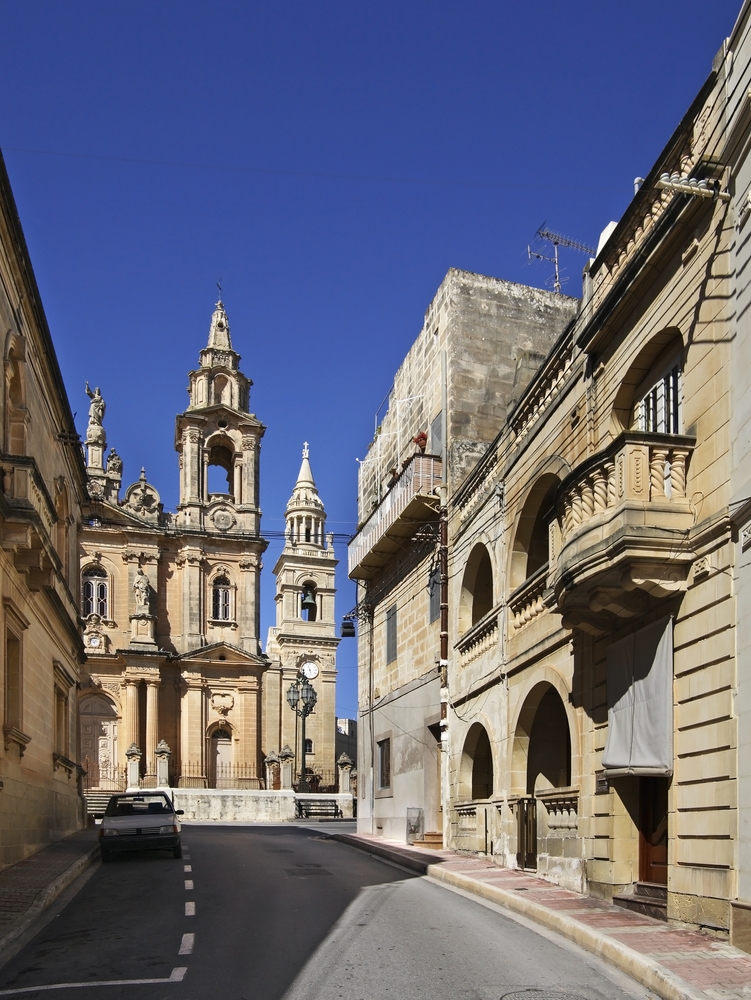
Gudja, a quiet village in southern Malta, boasts a history stretching back to prehistoric times. The area has been inhabited since ancient times, with Punic and Roman remains still found in situ, including the paleochristian Ħal Resqun Catacombs, first excavated in 1912. The village’s more documented history begins with the medieval parish of Bir Miftuħ, named among the twelve original parishes of the Maltese Islands as early as 1436. The village’s name is thought to derive from the Arabic word “kudya”, meaning “hill”, reflecting Gudja’s position on raised ground south of Valletta. Throughout history, Gudja has witnessed various cultural influences, including the Knights of St. John, who appointed a captain to defend the area during the Great Siege of 1565. The village is also known for its traditional Maltese townhouses and historical landmarks, such as the Parish Church of the Assumption, unique on the island for its three belfries, which serves as a central point of interest for both locals and visitors.
Where Gudja Sits on the Island
Gudja falls within the South Eastern District, in Malta’s Southern Region. Because of this, most people describe it as part of the South. It sits on elevated ground, though not quite a hill, with roughly circular boundaries, giving the village a naturally compact, well-defined shape.
Gudja borders Għaxaq, Luqa and Santa Luċija. As a result, you can reach the airport, the harbour region, and the rest of the south within a short and easy drive.
Gudja sits on elevated ground south of Valletta, overlooking Malta International Airport. It offers a genuinely quiet, character-filled village, despite sitting right beside the island’s busiest transport hub. So whether you are a frequent flyer or simply want an easy, well-connected base in the south, Gudja is well worth a look. Your next chapter starts here.
Schools in the Area
Gudja itself stays small and residential, with schools, clubs and public gardens found around the village core. Because it borders Luqa and Santa Luċija, families also have easy access to a wider range of church, state and independent schools just a short drive away.
Lifestyle in Gudja
Gudja offers a lifestyle rich in genuine local history, despite its modest size. The village has been inhabited since prehistoric times, with remains dating to the Punic, Roman, Arab, and medieval periods, including the Ħal Resqun catacombs, first excavated in 1912. Its oldest surviving houses date back to at least 1533, and its narrow streets are still lined with carved limestone balconies and old inscriptions from that era.
Gudja’s coat of arms carries the motto Pluribus Parens, meaning “mother of many children,” a reference to the fact that Safi, Kirkop, Luqa, Mqabba, Birżebbuġa and Tarxien all once formed part of the wider Gudja parish. The Parish Church of the Assumption, built in 1666, is unique on the island as the only church with three belfries, while nearby, Palazzo Dorell, also known as Palazzo Bettina, is believed to have hosted Napoleon during his brief rule of Malta.
Because of its history, quiet streets, and proximity to the airport, Gudja suits buyers who want genuine village character paired with real everyday convenience. Property here tends towards traditional townhouses within the historic core.
Feast Celebrations
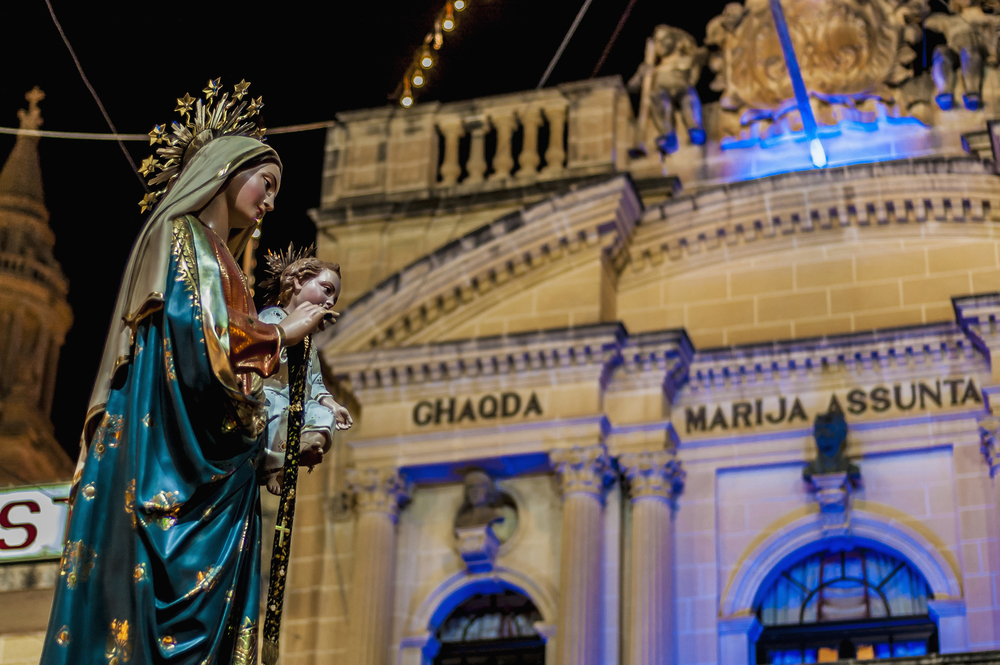
Gudja’s patron feast honours the Assumption of Mary, and it falls every year on 15 August, a public holiday in Malta. The parish church and the village streets are richly decorated for the occasion, drawing both locals and visitors to experience traditional Maltese religious folklore at its best. Gudja also holds a secondary feast in October, dedicated to Our Lady of the Rosary and Our Lady of Consolation, alongside a distinctive Holy Week tradition that includes the Seven Visits, or Is-Seba’ Visti, on Holy Thursday.
Restaurants and Dining
Gudja’s dining scene reflects its small, residential character, with a handful of local cafes and eateries serving the village day to day. For a wider choice, residents typically head into neighbouring Luqa, Żejtun or Marsaskala, all just a short drive away, for a fuller range of restaurants and evening dining options.
Grocery Shops and Everyday Amenities
Gudja covers everyday basics through a small selection of local shops within the village. For a fuller weekly shop, residents typically head into nearby Luqa or Santa Luċija, both offering a wider range of supermarkets and services just a short drive away.
Transport Links
Gudja connects to the rest of the island by bus, with route 226 serving the village directly, alongside routes 80 and 83 passing nearby. Because of its location next to Malta International Airport, Gudja also benefits from excellent access for regular travellers. For drivers, the village’s central-southern position keeps journeys to the airport, Luqa and the rest of the south comfortably short.
Special Designated Areas (SDA)
Gudja does not currently have a Special Designated Area. So if you are a non-EU buyer who specifically needs SDA status, which removes the standard property permit requirement, you may want to look at areas such as Portomaso or Tigné Point instead. That said, Gudja remains fully open to EU buyers, and non-EU buyers can also purchase here through the standard Acquisition of Immovable Property (AIP) permit process. Either way, its history and its closeness to the airport keep steady, long-term interest alive.
Nearby Beaches
Gudja sits inland, so it has no coastline of its own. Even so, the coast stays within easy reach. Marsaskala, with its long promenade, sits just a short drive away, while Birżebbuġa’s sandy Pretty Bay and the natural pool of St Peter’s Pool near Marsaxlokk are also reachable within a comfortable drive. So a day by the sea fits easily into life in Gudja, without ever feeling far off.
Nightlife in Gudja
Why Choose Gudja
Gudja offers something genuinely distinctive on the island: deep local history and quiet village charm, set right beside Malta’s main transport hub. Because of this, it continues to attract buyers who want an easy, well-connected base without giving up genuine character. Whether you are drawn to its churches, its old streets, or simply its closeness to the airport, Gudja offers a genuinely practical home in the south of Malta.
BUY
Properties For Sale in Gudja
RENT
Properties For Rent in Gudja
Coordinates
35.84833, 14.50250
Area
2.3 km (sqr)
Population
3,501
Patron Saint
Assumption of Mary
Localities
Discover other Maltese localities
Take a deep dive and browse the Maltese localities and local insights to see if the homes for sale/rent are right for you.