On furnishing the interior of your property in Malta
There has been more styles in current usage in the visual arts within the last three decades than ever before.
Travel and the modern mass media – cinema, television, colour photography and glossy magazines – have considerably widened our knowledge of foreign and ancient styles. Moreover, there has been an influx of new materials, either specifically produced or, what was previously regarded as unsuitable, has now been adapted to fit the artist’ s requirements.
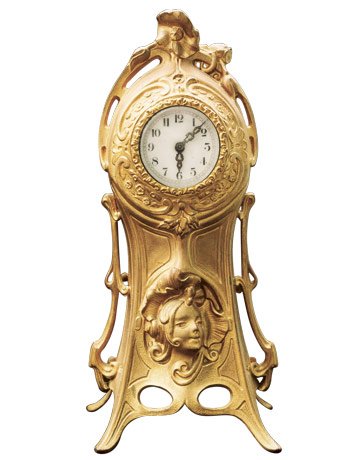
It is possible today to have different style furnishings adorning the same room and resulting in a harmonious interior. A modern Scndinavian teak chair, a Victorian desk, on which an abstract sculpture of polished bronze stands next to a piece of Sicilian folk art pottery is possible. On the walls abstract paintings and 18th century watercolour landscapes may co-exist with an Art Nouveau clock and Jazz Age ornaments on a locally manufactured limestone mantelpiece. This eclecticism in taste would not have been possible a hundred years ago. Nowadays there is no one standard of taste.
Besides the musical revolution the spirit of the Sixties had enabled designers to create new shapes in furniture, ceramics and other products based more on the precision of geometric figures than the traditional forms. It’s interesting to note that the long-established shapes of furniture, like chairs for example, were never seriously questioned until the 20th century. John Wright and Jean Schofield were two young British designers who in the Sixties were responsible for  stripping furniture down to its basic essentials. They gave their chair a sweeping curve of the arm and used thick lacquered wood frames to give it a primitive quality. The Italian Osvaldo Borsani, in 1966, used black plywood and simple leather upholstered cushions fastened by large wooden bolts. His intention of giving the modern chair an informal appearance went down well with both the critics and the public.
In the meantime the Americans were experimenting with tubular metal and criss-crossed wire framing. Fibreglass then enabled designers to mould furniture pieces like chair seats any way they wanted to; from like an egg with one side scooped out, to segments of a sphere.
However when it comes to furnishings there is no escaping the standards set by the Swiss-French architect Le Corbusier and his ideals for furnishing the modern house. He is what Chaplin is to comedy, Diagheliv to dance, Shakespeare to drama and Beethoven to music. His maxim was that a house is “a machine for living”. Borrowing from the Francis Bacon immortal essay “Of Building” whose theme was: “Houses are built to live in and not to look on” Le Corbusier concluded that the best furnished dwelling was one which combines ‘commodity’ (or fitness for purpose), ‘firmness’ (or strength) and ‘delight’.
 In his widely read book, Towards a New Architecture, Le Corbusier refers to the house as “a machine for living”. He argues that with the machine being an event of such importance in human history, it should be allowed to perform a decisive role in conditioning modern man and the works around him. As a radical thinker he dismissed the use of past styles believing that they no longer had a living relevance but merely a historical interest.
Le Corbusier’s philosophy of furnishings which eventually gave way to the Jazz Age style to be later followed by the Modern Movement entailed leaving a room in its purest form. Devoid of almost any pattern or applied decoration, even of curtains which are normally used to soften the window’s outline should not inhibit the room. Blinds or shutters are preferable. In such a set-up Le Corbusier maintains that interior furnishings would be of severe rectilinear forms with no soft curves allowed to interfere. The furniture may be made of traditional materials such as wood, however sheet and tubular metal was preferred.
When it comes to paintings which adorn the walls most of the contemporary masters like Paul Klee, Kandinsky and  Rothko, seem to agree than rather than pleasing the eye, a work of art should strike the “vibrations of the soul”. This is done by stripping the painting down to its barest essentials. What matters is not the subject-matter, its movement or texture but only colour and feeling. This enables the viewer to become immersed in the work, oblivious to the surrounding distractions. According to the masters, a work of art’s distilled beauty should be a subject fit for deep contemplation. In fact one critic has called such abstract art: a Buddhist television set!
Whenever I am asked an opinion about any kind of furnishing, from a single room to a set design for a play or ballet, I inadvertently end up asking myself:
You think you can live with this thing?
 Written by Tony Cassar Darien